__largepreview__.webp)
Abide in Chist
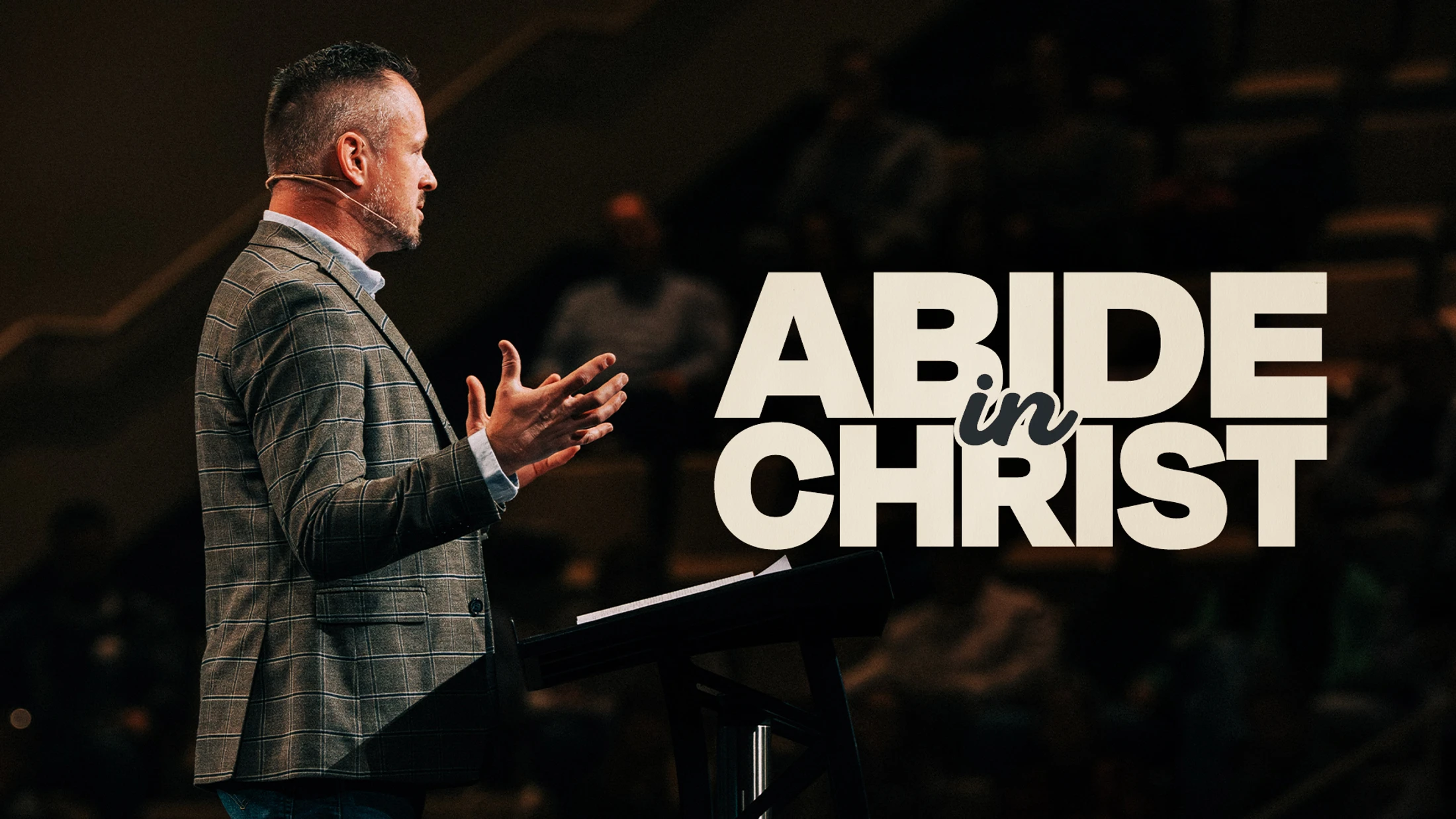
What does it really mean to thrive? In a world filled with quick fixes and self-improvement plans, Jesus invites us to something deeper, to abide in Him.
In this message from John 15:1–8, Pastor Tim Meier reminds us that real growth and lasting fruit come only from staying connected to the True Vine. God lovingly prunes what hinders us, not to punish, but to produce life that endures.
Discover how to remain in Christ through everyday rhythms of prayer, awareness, and trust, and how abiding leads to a fruitful life that brings glory to the Father.
👋 New to Grace | gracecma.org/new
🙏 Prayer Requests | gracecma.org/prayer
👏 Give | gracecma.org/give
📱Website: www.gracecma.org
Well, good morning again, Grace family. Whether you're in the room in Middleburg or joining at Olmsted Falls or Lorain or our Spanish campus, that'll be happening soon here at Middleburg. So glad and it's such an honor to be a part of a church that is worshiping the same Jesus in multiple locations today. And he's at work in all kinds of different places and people. To continue our series Life on the vine today with one of these core passages of scripture in John chapter 15 that you just heard some verses from in the video.
There's so much in our world that is focused on thriving. What does it mean to thrive as a person and in a self help sort of self improvement culture? That's a powerful question to ask. How do I move from surviving to thriving? So we've got different fads and some people are just trying to make money, but there's different science that comes out.
You should eat this. Low fat. No, not low fat. Now carbs. No carbs.
These kind of carbs. Okay. Exercise, not so much cardio. I mean, we have all kinds of trends. Not too long ago, people were buying steps to put in their house to do step aerobics.
I used to think to my mom, like, mom, we've already got some steps right over there. You just walk, walk up and down the steps. But then, you know, I bought a peloton off of a friend who bought a peloton who, you know, never used the peloton, and I'll probably sell mine. So, you know, it's, we're all in these trends and it's because, and it's powerful to us because all of us have this question about how to make my life count or better or live longer. I'd like to suggest to you that there is thriving, there is spiritual thriving that exists, but it's different than these because these other things that I've mentioned are really short term solutions for a long term desire to have meaning, to know what it means to be on this earth to be healthier.
And a lot of those things are good. If we eat healthy and we exercise, that's a good thing, that's not a bad thing. But the true thriving happens in a different place. And we're in church, so it makes probably nobody that surprised that our answers are in scripture. But these aren't just verses this morning to memorize.
These are principles to live into. And they're principles that point us to a person, the person of Jesus. Let's read this together. If you have a Bible or A device or just follow on the screen. John, chapter 15.
Again, Jesus is talking to his disciples, his friends. I am the true vine, and my Father is the gardener. Every branch in me that does not produce fruit, he removes. And he prunes every branch that produces fruit so that it will produce more fruit. You are already clean because of the word I have spoken to you.
Remain in me and I in you. Just as a branch is unable to produce fruit by itself unless it remains on the vine, neither can you unless you remain in me. I am the vine, you are the branches. The one who remains in me, and I in him produces much fruit because you can do nothing without me. If anyone does not remain in me, he is thrown aside like a branch, and he withers.
They gather them, throw them into the fire, and they are burned. But if you remain in me and my words remain in you, ask whatever you want and it will be done for you. My Father is glorified by this, that you produce much fruit and prove to be my disciples. Jesus is talking here about what it means to thrive spiritually. And at the end here, he says the purpose of thriving or abiding is fruit.
We're going to talk about fruit in just a minute. But Jesus isn't just saving us to just give us a lifeline for the future, but to say, what does it mean that God takes over our lives and produces fruit? At the beginning of the passage here in verse one, Jesus says, I am the true vine. This is the seventh time in the Book of John that Jesus uses the I am statement. He says, I am.
Last week we said the way, the truth, and the life. In other places he says, I am the bread of life. I am the gate. I am the good shepherd. I am the door.
And he's using these I am phrases to show that he himself is God. When he says, I am the vine, he's making some of his disciples think about an encounter that a guy named Moses had with God at a burning bush, when this bush is talking to him and inviting him to go set his people free. And Moses gives a lot of excuses, but then finally says, fine, who do I say is sending me? And God says, tell him I am has sent you. I am or I will be what I will be.
I am the existence of all things. I am the one that holds them together. I am the Creator. And Jesus, by saying I am, is helping them understand he and the Father are one. That's important for us theologically.
It's also important for us because it's only in Jesus because do we find the key to I am existence here? He uses an analogy when saying, I am of a vine and a vineyard. The idea of a vineyard is used over 200 times in scriptures as an analogy for spiritual life. In some way, the kingdom of God in some way. And we see it the future, you know, promise of we're going to eat at the wedding feast of the lamb, and he is going to have the fruit of the ultimate vineyard.
There's all these vine and vineyard analogies in Scripture.
Part of the reason for that is to help people understand that there is goodness that comes from God, but also that there is fruit in knowing God and living with God. A vineyard doesn't exist just for itself. A vineyard exists for fruit. In fact, if a vineyard doesn't produce fruits, like, what's the point of the vineyard? But fruit shows that the vineyard is alive.
So what do we mean by fruit? Well, this passage, let me just say we could spend a year on this passage alone. I mean, we could spend five to 10 weeks on each verse because it's so rich. So I invite you to keep on digging in. That's the beauty of following God.
You keep learning new things. But let me just give you a cursory look even at what it means to abide. And what does fruit mean? Well, Paul says in Galatians 5, a passage that is very familiar to all of us. That, or a lot of us, at least, that when Jesus comes and gives us his spirit, he produces in us love, joy, peace, patience, kindness, goodness, gentleness, self control.
So at the very least, the kind of fruit that the Father wants is this kind of fruit. Love and joy and peace and patience. One good spiritual inventory question is, have I shown more joy this year than I did last year? As I walk with God, am I more patient than I was 10 years ago, or am I more impatient? And so then we ask God to produce his fruit in us.
It's clear that he's the one producing the fruit. But this is kind of fruit Jesus is talking about. And not just this, not just the fruit of the Spirit. There's other evidence. When someone opens their home to a foster kid and adopts them fruit.
When someone is broken free of an addiction that they've been battling with fruit. When somebody just confesses their sin for the first time, there's fruit that God is active in their lives. I told Rachel the other day that I feel like we are plant serial killers. Like every plant we get, we kill. It's like the opposite of Jesus.
But you can tell we don't water right or put them in the right place with the sun. But you can tell when a plant is starting to. Near the end told me last week, just take that one down to the curb. That one is dead. You can tell because the green starts going away and it starts withering and the plant starts dying.
And so Jesus, what he's saying is, as we abide in him, we get to produce and partner with him for good fruit. Not fruit that withers, but good fruit that he produces. Here's a couple of ideas of what it means to abide this morning. And what does fruit look like? And the first one starts with a bit of a challenging concept because it's great to start with.
I am the true vine. My father is a gardener. Love it. And then he follows it with every branch that doesn't produce fruit. He removes and he prunes every branch that is producing fruit so that it will produce even more fruit.
He's the one that gives us life, and he's the one that ensures the fruit. But Jesus says the first step to knowing that you're going to produce fruit or abide is that you've experienced some pruning. The first thought this morning, and I'm starting as a pastor here with you my second week. So let's use some alliteration. Painful pruning produces fruit.
Painful pruning produces fruit. Jesus says, I'm the vine, and he's going to make these great promises about abiding. But at the beginning here, he says there's pruning.
It's not really fun to think about pruning or receive it, to be honest. It'd be nicer to just find the kind of thing that doesn't cost us anything. But that's not how life works, and it's not how our spiritual life works either. God prunes us in a variety of ways. Let me suggest just a couple to you.
1. Sometimes God prunes us intentionally with his hand or circumstances because we're off track. We are giving in to sinful ways of thinking or living in the way we spend our money or in the way we live out our sexuality. Or maybe our affection for God is dropping and God wants to get our attention. So he brings something into our lives to wake us up because he wants fruit.
And he knows that we will wither and die without Him. So sometimes he brings in discipline into our lives. All of us, even if we've been living and walking with God for a long time, are still children of God. We're still his children. That's a metaphor in Scripture as well.
And some days we really feel like children. Like, man, I should know this by now. Why am I reacting like this? But in moments of discipline, we feel the most like children. And it's okay.
God is so patient with us. But when our boys were little, we had different tones of voice for different circumstances. Sometimes it was because something bad was happening. Sometimes it was because there was danger at the doorstep. Like if the boys were playing in the driveway and they got too close to the road and a car was coming, it wasn't the time to go, hey, guys, maybe don't play in the road.
The volume goes way up. And when they're little, sometimes they're, like, so shocked by your tone of voice that they start to cry. But at that point, you don't care if they're crying because you don't want them to die. And so Jesus, because He loves us, and the Father who is the gardener, prunes us because he wants to keep us out of the road where we're going to die. And many times our own choices lead us down that path.
That's not the only way he prunes us. Sometimes God prunes us by allowing the circumstances that we experience to refine us if we choose in Sometimes we become the person that he intends for us through the pruning of painful circumstances in our lives. There is so much brokenness in our world, and we have all experienced it. And some of us have experienced intense brokenness even this week. I used the illustration last week of my friend Nick, who's lost his dad to a drunk driver.
God doesn't cause a drunk driver to kill someone. I don't believe, on the other hand, that there are accidents in God's plan. But in all this brokenness, God lets things happen. And God uses these circumstances in our lives if we'll let him to shape us. He didn't orchestrate.
He doesn't have it out for you. But he will use these moments to shape you and refine you. Can you think of somebody who has been through something awful in their lives? A lifetime of challenge, struggle, loss, loneliness, maybe the death of somebody so close to them. But because they have been willing to partner with what the gardener is doing their lives, they turn into the sweetest, most mature, patient person.
God never wastes our pain, but he will redeem our pain if we will partner with him in the pruning. Your pain isn't wasted. And sometimes we become the person that we were meant to be as we partner with him in these Circumstances. It's partly because if you know somebody like that, they partner with God in their suffering. As Christians, we acknowledge our suffering.
We don't deny suffering. The psalmists give us a good blueprint of this. I was just reading Psalm 129 and 130 this week, where the psalmist cries out, out of the depths, I cry to you. So the psalmist is acknowledging there are depths and I'm in them. But instead of running somewhere else, I stay with you in the suffering.
And then God refines them. What God is doing in pruning is really working to crack this outer person that we try so hard to maintain and control and present to others. And it's rarely fun. But what he produces inside of us is fruit that will last for decades, and maybe even centuries, as we see people come to faith. Paul in Galatians 5 says that the Spirit is at war with the flesh, and when we walk in the Spirit, we don't gratify the desires of the flesh.
But it is a war we're at battle with. And sometimes the only way we start to see victory is to partner with the gardener when we get pruned, whether that's from discipline or just circumstances. Here's the good news. As Brian Laritz reminded me recently in one of his messages, when God is pruning us, he is the closest to us. The gardener who cares about the plant is getting right in there.
And I don't know a lot about horticulture. I already said we kill all our plants. Sometimes I look at a plant and go, or a bush, like, you cut that back too far. But the one who knows what they're doing knows what they're doing. And some of us feel like that this is too far.
I'm being pruned too much. But the gardener is the closest when he's doing the pruning, and he's in it with you.
Let's continue. Verse 4. Remain in me, and I in you. Just as a branch is unable to produce fruit by itself unless it remains on the vine, neither can you unless you remain in me. I'm the vine, you're the branches.
The one who remains in me and I in him produces much fruit because you can do nothing without me. It's just a good reminder always that we can do plenty of things without God, but nothing that lasts. We can do a lot of things without God. We're like Jesus, I can do nothing without you. I can do a whole lot of things.
Yeah, but nothing that lasts for eternity will be done. Without Jesus.
The second thought about fruit is really the core here, and it's to abide a lot of, you know. But the New Testament was written in Greek. So John, when he was writing down these things, thinking about what he had seen and heard so that he could pass it off as a story for people for generations, was writing in Greek. And this word that he wrote that we translate, remain, in the translation I just read for you is the word meno in Greek. And that word is important because it's talking about setting up shop.
I'm using the word abide, which is another translation for remain. You could say stay, you could say move. In menno gives this active understanding of connecting with God in the active. So it doesn't just mean we abide in Christ. Let's take a nap.
That's good. Some of you should take a nap more often. It's okay. God's in control. But what this word means is that we actively rest, we actively build a house, but Jesus is the foundation, and we say, I'm going to abide and live in and with you.
As we were preparing for this service, Pastor Steve Harper reminded me that in his first week here at Grace Church a couple of years ago, a couple of decades ago, Pastor Donald Schaefer, Jonathan's dad, was the pastor that said to him, steve, if you want to do well here at Grace, abide in Christ, everything else will be false success. That is a good word, not only for those of us in ministry, but just for those of us who want to thrive in our lives, that if we don't abide in Christ, everything else could look successful, but it's free false success, because it's not built on the right foundation. So a couple of thoughts about what does it mean to abide? First, I mentioned Dallas Willard's principle last week. I'll bring that back up today, that as we walk with God, our consciousness of him, our awareness of him, our mindfulness of Jesus, goes up.
We are more aware that God is a part of our lives in the everyday moments. And we cultivate this in a spirit of prayer. We're gonna look at a series on prayer in a couple of months, and so I'll have a lot more time to talk about prayer. But I'm not just talking about sitting down and going, all right, I'm gonna pray through the requests, although that's very important. But the spirit of prayer that God invites us into, which helps us awaken our awareness of him so that we don't just turn it on and off.
Paul says in everything. Philippians 4, when you're anxious, bring your request to God in everything. When you're anxious about anything he says In First Thessalonians, we pray without ceasing. What does that mean? Well, it means that you're not always praying churchy kind of prayers where you're saying things like we would from the platform, but you're at your desk or you're at work or you're at home.
And when you're doing your spreadsheet, you're not necessarily doing it like you would in a small group, but you're aware of God and you're aware of his presence with you, and you're more able to go, you're here, ooh, you just brought a thought to mind. I should think about that. Ooh, there's conviction from the Spirit. And we, as we walk with him and abide with him, get to know him in prayer. We also, secondly, not only are mindful of him, but we develop rhythms with Him.
And we develop rhythms intentionally. In other words, we intentionally plan our lives around the person that we care most about. Since we are actively living and actively abiding with God, we know our lives come from him, but we have to intentionally plan to experience him and also plan to live with him and for Him. Just like Rachel and I have to look at our weeks, like many of you do, if you got kids at home and go, yeah, Monday night's this, Tuesday night's this. When you have multiple kids, you're like, you take him there, you take him there.
That one's walking. I don't know how he's getting to the next thing. We're juggling all these schedules. But we have to plan for it. Cause it doesn't just happen automatically.
And when we don't plan, we're all sideways that day, and we're all frustrated. And so part of our life with God is to intentionally abide that. We intentionally plan times of prayer or Bible reading. Maybe intentionally you join a small group, and you've never done that at grace before. We've got a list of classes coming in a couple of weeks.
Maybe you sign up for one of those or re enter. And we intentionally orient our lives around the vine. Because if the vine is what produces life, then staying disconnected from the vine doesn't make a lot of sense. This isn't a burden. And it's not about trying to get God to like us.
This isn't about doing more things so that God's like, finally, you showed up and did the things it's about intentionally knowing the life comes from him and then letting it flow out of us. The third and a little bit of a cautionary cautionary is too strong a reminder about our abiding relationship with God. It takes a long time to become like Jesus. It just takes a long time. It takes longer than we would like to overcome battles to find our.
There are some things that happen immediately. Some of you, when you came to faith, it was like, whoa, Right away, I'm getting free from some things. But for most of us, there are certain things in our lives that just takes a long time. Jesus says, remain in me. Remain in me.
Stay here with me. When he uses the analogy of a vine in a vineyard, the disciples are no doubt thinking not just about the grapes, but about the wine the grapes produce. And they know that it takes a long time to make good wine. If you wanted to get into the wine industry, I'm not suggesting that you do, but if you wanted to, and you went to Napa and you bought some land, did you know that from the time you receive your ownership of land there to the time you get the first bottle you can sell is minimum, eight years, minimum. Now, if I was to tell you, just eight small years, and you'll start feeling that we'd go, I don't know if I have the patience for that.
And again, it's not science in every way, but it takes time to have God form these things. So first of all, be patient with yourself. Realize that we're all on a journey. But also sometimes it's in the time that. That God wants to produce in us the things he's doing.
I mentioned that person that's gone through terrible things, and they produce a beautiful life. Why? Because over years and years, they're depositing surrender, they're depositing humility, they're depositing joy, and at the end, they reap that all. But if we deposit bitterness and anger and frustration, eventually that's what we reap as well. And it takes time.
But it is hard to wait. When the boys were little, I was traveling a lot, giving oversight to one of our mission structures in vision. And I had just come back from a trip to Africa, and I was just about to head on a trip to Taiwan, where some of you from grace are going to go on a mission trip in a few months to the exact same place. And it was the week of Thanksgiving, so I just got back. I'm fighting jet lag.
It's Tuesday, week of Thanksgiving, and I had promised the boys I'll Take you roller skating. We get in the van, we're headed to the roller skating rink, and we get T boned by this high school. Driver hit the driver's side, and it was a little gnarly. I mean, my arm was up. I still kind of have a shoulder issue a bunch of years later because of that, but I was bleeding because the airbag malfunctioned and the car then caught fire.
And so we have a fire truck and an ambulance. And it's a little dramatic in this intersection. And we're standing on the other side and I've got blood dripping on the ground. And Jude, who's about 4 years old at the time, looks up at me and says, so does this mean we are or we're not going roller skating? And I said, buddy, I gotta go to the hospital, we can't.
And he goes, I knew you would never take us. I knew it.
I canceled the next trip. We staying together. It's hard to wait. And many of us don't maybe verbalize those kind of sentiments, but we feel them sometimes. God, I've been waiting for this.
Like, what are you doing? Come on, please. And it's in the waiting many times that the abiding is refined in a quick fix culture that's tricky for us. Third thought, and we're moving towards the end now, is a hard verse in the middle of these. Jesus starts with a bit of a hard concept pruning, and then he goes to a pretty hard one in verse six.
If anyone does not remain in me, he's thrown aside like a branch, and he withers. They gather them, throw them into the fire, and they are burned. The third main idea about abiding this morning is that there's cost to rejecting the vine. There's cost. Whether we interpret this verse as the ultimate cost of hell, which is real eternal separation from God, or we interpret this verse as those who are just cast aside and not able to see the fruit of what it means to live with God, to see fruit in other people's lives, to get free from the things we're struggling with.
Either way, there's cost. So there's ultimate cost and there's also day to day cost. And Jesus just says, if you reject the vine, you get what you ask for. These are hard verses. As a pastor, I don't like reading verses like this because I'd rather just say things that make us feel better, frankly.
But it's my job to read what's in front of us in the text and what Jesus is doing Here is not out of an angry spirit, but out of an invitational one, because he loves us. If you don't abide with me, then you get. Here's two cautions here. First, Jesus is the hardest on religious people.
So Jesus is the hardest on Pharisees. He says the strongest things to people who have memorized a lot of Scripture but have replaced vibrant relationship with God and humility with religious activity. And so it's possible to actually do a bunch of religious activity and not be abiding. So I want to invite you to that sweet relationship rather than just a religious one. On the other side, it's also possible to disconnect willingly from the vine.
Some of us will know when we're disconnecting, and we choose the willful sin. And Jesus says, don't do that. It's also a caution to us to realize that abiding in Christ is active and ongoing. And so abiding in Christ means that we have to stay connected to him. And when we spend a lot of time ingesting other things, and maybe it's just the sheer amount of time that we spend ingesting certain things in entertainment or social media or news media, that starts to unsettle our souls.
And we realize, man, this is going to be a big jump back into abiding. And at that point, we just say to the Spirit, I'm sorry, could I get back connected. And he's faithful and he forgives our sin. But it is important to understand that sometimes we're choosing not to stay in an abiding relationship, and God doesn't want that for us. Finally, this morning, this beautiful promise.
If you remain in me in verse seven, and my words remain in you, ask whatever you want and it'll be done for you. My Father's glorified by this, that you produce much fruit. Prove to be my disciples. Jesus says, if you remain in me, my words in you, you can ask whatever you want and it'll be given to you. Now, this verse can be used in all kinds of wonky ways to say, you can just say something and it'll happen if you're a Christian.
I think what Jesus is saying is, as you abide in the Father, as you get to know the character of the Father, the kind of things that you ask for, because your will and your understanding are starting to line up with what God cares about. The more you abide, the more you know even what to pray for. I was running one day and I said, man, I haven't shared my faith in a While even though I'm in ministry, God, would you bring me somebody in my path? This is what I prayed, literally, that I could share the gospel with. I don't know where to go today.
And I was running on a trail when I prayed this, and I kid you not, three, four minutes later, some guy runs up next to me and we start talking. He says, what do you do for a living? I said, I'm a pastor. He goes, man, that's great timing for me. I'm searching for God.
Wow. How many times have I not prayed this prayer? And I should be praying it. But these are the kind of prayers God loves to answer because our hearts are aligned with what he cares about. Ask whatever you want in my name and I'll give it to you.
And then the final promise. My Father is glorified in all of this.
He says, ultimately, when you produce fruit, you get to see that your life isn't just about you. Even though God loves you, even though your life is important, even though he's doing something special in your life, it's not just beginning and ending with you. Ultimately, this is about the glory of someone else. And as we abide with him, we realize that that's actually good news. It's not bad news.
At the beginning, it might feel like, oh, but then we get to go, oh, I'm so glad my life's not about me. And we get to live for the glory of the Father. As we conclude this morning, I want to invite you into the kind of relationship that pursues abiding, a hungry, intentional relationship that pursues an abiding one with God, that receives his pruning, that orients your life intentionally around him, that realizes there's cost to this if we choose our own way, but then that we have this connection to the very God who created all things right at our doorstep. This morning, we're going to sing a new song as we close in multiple campuses. And it's a song that's been special to me these last couple of years.
And it's a song that is right out of John 15. We're going to sing back the words that we've heard, and it'll be new to some of you, but as we sing it, let's respond to him and be genuine about the fact that we need him to teach us how to abide. We don't even know where to start sometimes, but that he's ready to answer that prayer. The altar is always open. Let's do real work with a God who really loves us.
Let's pray together. So, Father, we welcome you, the gardener, who is close to us when we're being pruned, who is close to us all the time.
Jesus, some of us are having a hard time waiting for what you're trying to do in our lives, and I pray that you give us patience. Eyes to see and ears to hear what you're doing as we respond to you this morning. Would you do the work that you need to do to remind us that there is life on the vine if we stay connected to you, Jesus. Amen. Let's respond together.